Tuesday, December 13, 2016

Monday, December 12, 2016

The Creative Controls - Using Motion-Diptychs, Triptychs and Poetic Imagery

Panning:
Source: Christopher Martin

Slow Motion:
Source: Delana
Freeze Action Photography:

Source: Becca Kelly

Total Motion:
Source: Lilly Berri

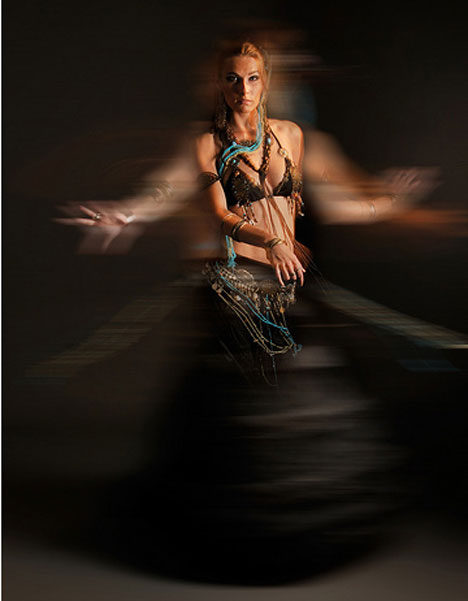
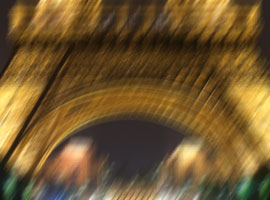
Camera Shake:
Source: Cammie Levi

Examples of Diptychs/Triptychs:
Definition: A series of pictures that relate to one another to create a story.
Source: Misha Gregory
Source: Kirsten Smith

Saturday, November 19, 2016

Exploring Depth of Field and Abstraction

Abstraction: Random shapes, shades, and colors that do not follow any specific pattern.
- Relation to Photography: Utilizing those features you can create interesting photos with good composition that are unlike other things that have been seen before.
Taken by Sharon Johnstone
In this picture, depth of field was used to focus on the closer dots but the colors in the background are an object but the depth of field focuses on the closer objects.

Taken by Kay Brenner
This photo does not have as much depth of field, although the closer parts of the spiral appear clearer than the further ones.


Taken by Elise Soul

This photo does utilize depth of field and focuses solely on the spider web while there is clearly something in the background, but it is not clear to the eye.

David Hockney Joiners:
David Hockney

David Hockney

Below is a work that was inspired by Hockney
Brno Del Zou


Tuesday, October 25, 2016

Composition Hunt - Elements of Design


Jagged Line Photography:
Taken by Oliver Biggs
Textured Photography:
Taken by Ansel Adams
Shape Photography:
Taken by Kyle Ester
Space Photography:
Taken by Randy Ziegler
Value Photography:
Taken Laurent Baheux

Tuesday, October 18, 2016

Composition Hunt - Framing

These are some photos that use composition to create a well planned out photograph.

Leading Lines:
Taken by Jim Zuckerman
Rule of Thirds:
Taken by Ken Hubbard
Strong Diagonals:
Taken by Erez Marom
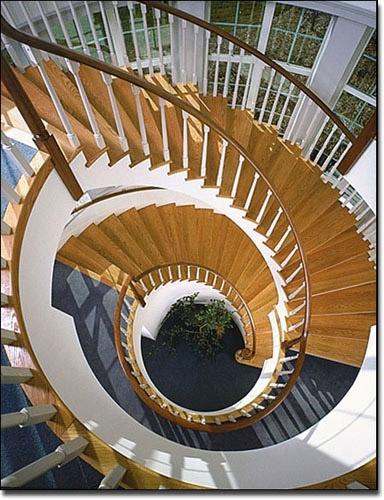
Bird's Eye:
Taken by C. Smith
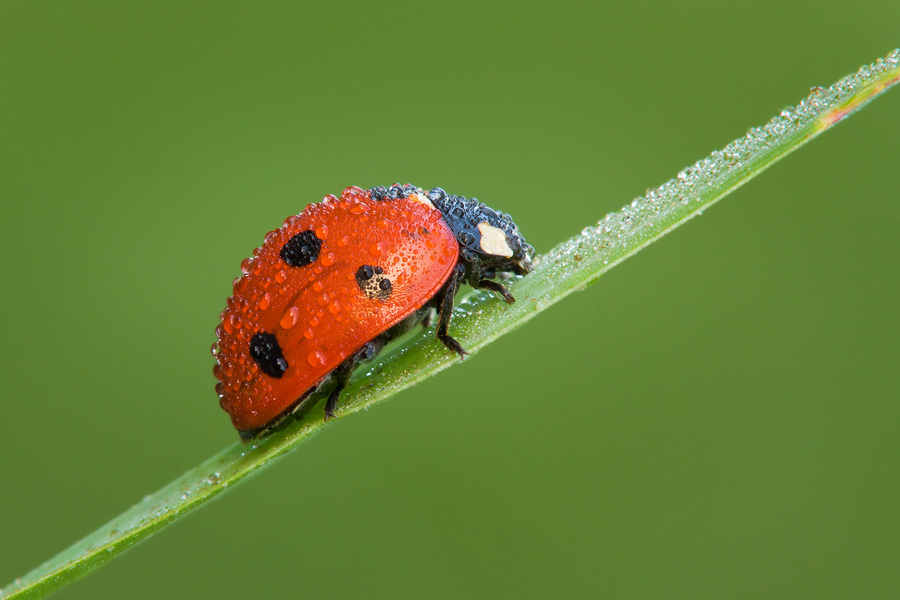
Bug's Eye:
Taken by Brett Edge
Close Up:
Taken by Nick Harris
Frame within a Frame:
Taken by Learn Durkin Student
Filling the Frame:
Taken by Delaney Lou


Tuesday, October 11, 2016

Oldest Family Photograph

Isobel Matthews Patterson was my paternal great-grandmother and was born in the 1913 and died in 1979.


When she was just a child, she came over from Ireland. Her parents were servants at Wallingford Castle which was a grand house in Pennsylvania.  The house had a beautiful grand piano which the owners eventually gave to Isobel because she was the only pianist and they loved to listen to her play it. That piano has since been transported across the United States and now my family owns it and it is in our living room to this day.


She then taught piano lessons to my mom starting when my mom was about 4 or 5.  She was also the church organist and a beautiful piano player.  


She died when I was my mom was about 11, in 1979. Her oldest son, my grandpa was exactly like her. He looked very similar and had a near identical sense of humor accompanied with a very loud guffawing laugh. That laugh has been passed on through the generations from Isobel to my grandpa to my mom.


Isobel Patterson also loved to cook and my mother would eat dinner there every Sunday night.


Her oldest child, who was my grandpa, was the first person in my mom’s family to ever attend college.

She came from a very definite working-class background. Her husband worked for a trucking company and therefore did not bring in much of an income. But overtime, her love of music and love of laughter made her life radiant.  She also had a healthy and very active curiosity. They took the time to host a young Japanese man in the early 1960s for nearly two years. They then later ended up building a Japanese Garden in their backyard. This is long before anything of the sort was a usual thing.

Saturday, September 10, 2016

Early Process - Carbon Transfer Photography

Carbon Transfer Photography: Using paper support, coat one side with a very pigmented gelatin solution. After exposure, transfer to temporary rubber support so that it can develop. When dry, the image is transferred to final paper support. They can be made in any range of colors, the basics being black, sepia and purple brown. The main keys of carbon Transfer Photography are:
  • Sharpness — Unlike some of the other historical printing processes carbon prints have great apparent sharpness. In fact, because of the manner in which relief accentuates apparent sharpness, carbon prints with relief often appear sharper then silver prints.
  • Choice of color — Bostick & Sullivan offer carbon tissue in several colors, and the hand manufacture of tissue makes it possible to produce images in literally any color imaginable.
  • Stability — The archival quality of carbon prints is superb. When suitable pigments are used the stability of carbon is limited only by the final support, making it the most stable of all photographic processes.
  • Surface Quality — Depending on choice of tissue, and the final support, carbon prints are capable of a wide range of appearance. Prints may have a matte surface like Pt./Pd., a glossy surface like silver prints, or a relief surface that gives them a three-dimensional quality.
  • Shadow Detail — The shadow separation of a well-made carbon print can be startling. Unfortunately it is impossible to fully capture this print quality in magazine reproduction so that is one of the qualities we cannot show in this article.
  • Choice of Final Support — Since carbon reliefs can be transferred to any suitably prepared surface there is an almost unlimited choice of final supports: watercolor papers, fixed out photographic papers, canvas, glass, even metals. Surface preparation of the final support merely involves coating with a layer of hardened gelatin.
  • Tonal qualities — Carbon has a long tonal scale and excellent straight-line characteristics, qualities which allow the use of fully detailed negatives with long density ranges, resulting in an even distribution of tones from the highest lights to the deepest shadows.

Paul Smith
Jens Liebchen
Works Cited
"Art & Soul - Color Carbon Printing for Fine Art Photography." Art & Soul - Color Carbon Printing for Fine Art Photography. Web. 09 Sept. 2016.

Rose, Eric. "Sandy King." Carbon Transfer: Contemporary Printers. Web. 09 Sept. 2016.

Monday, May 16, 2016

Project 10 - Utopia/Dystopia short video

A utopia is an imagined place that is the image of perfection. Here is an example of utopia.
Photo by Aremac


A dystopia is an imagined place where everything is unpleasant. Here is example of dystopia.
Photo by Mr Nice Sai

Friday, May 6, 2016

Project 9 - Magazine

For this project, i made a food magazine featuring different food parts around Portland and some advertisements of famous well known brands of food. It features the latest food places around town.


Tuesday, April 12, 2016

Project 8 - Portraits

This is one of the first portraits that I took. I made sure to make a wooden background so that it has texture but doesn't pull away from what is happening in the portrait. I think put a tinted black and white filter on the photo and I like how it turned out.

This is another photo that I took while at Ruby Jewel Scoops and I used the wooden background again and tried putting my other friend there instead with a hat so it gives the photo a different dynamic.
This is a photo taken with a donut over the eye which gives the photo more depth. I changed the color to Black and White because otherwise the photo had too much going on.

 This is another portrait I did when it was dark outside and I like how the green leaves contrasted with her green eyes and they look the same color. Her pale skin also contrasts really well with the background and she is wearing colors that make her pop.

This is my last portrait that I liked because it is very different, and her face stands out a lot and her hair fades into the black background. Her skin also shows some texture and I really like how it turned out.